

Es noticia: Guerra Irán y precio de la luzLlega VEM 2026Cierre del estrecho de OrmuzTrump energías renovablesCómo elegir instalador de paneles solaresCapacidad eólica y solar España 2026Precios paneles solares 2026Aerotermia como funciona
  • Quiénes Somos
  • Newsletter
  • Tarifas
Energy News
  • ACTUALIDAD
  • RENOVABLES
    • EÓLICA
    • BIOMASA
    • GEOTERMIA
    • BIOCOMBUSTIBLES
    • RECICLAJE
    • HIDROELÉCTRICA
    • ENERGÍAS MARINAS
    • ALMACENAMIENTO
  • SOLAR
    • FOTOVOLTAICA
    • SOLAR TERMICA
    • TERMOSOLAR
  • AUTOCONSUMO
  • INFORMES
  • AHORRO Y EFICIENCIA
  • HIDRÓGENO
  • CAMBIO CLIMÁTICO
    • MEDIO AMBIENTE
    • TRANSICIÓN ENERGÉTICA
Sin resultados
Ver todos los resultados
  • ACTUALIDAD
  • RENOVABLES
    • EÓLICA
    • BIOMASA
    • GEOTERMIA
    • BIOCOMBUSTIBLES
    • RECICLAJE
    • HIDROELÉCTRICA
    • ENERGÍAS MARINAS
    • ALMACENAMIENTO
  • SOLAR
    • FOTOVOLTAICA
    • SOLAR TERMICA
    • TERMOSOLAR
  • AUTOCONSUMO
  • INFORMES
  • AHORRO Y EFICIENCIA
  • HIDRÓGENO
  • CAMBIO CLIMÁTICO
    • MEDIO AMBIENTE
    • TRANSICIÓN ENERGÉTICA
Sin resultados
Ver todos los resultados
Energy News
Sin resultados
Ver todos los resultados

The cost of renewable generation in the islands

Por Carlos Sánchez
17/05/2017
en OPINION
0
renewable generation in the islands

Our expert this week, Pablo Corredoira, warns in this article about the grievance suffered by renewable generation in the islands – Canary and Balearics Islands – and also in the extra–peninsular territories of Ceuta and Melilla and which because of their situation are subject to a delay in the collection of the corresponding remunerations.

Over the last years, the renewable sector has been caught in a «so on and so forth» of injustices. The cut in remuneration, the moratorium on new facilities, the increase in tax rates, and the barriers to self-consumption, among others, have dampened the one that was once one of the main engines of our country’s economy. To add insult to injury, for some time we have been denouncing another foolishness being suffered by the renewable facilities in the Canary and Balearic Islands, Ceuta and Melilla.

As a summary of what has happened, in a dubious interpretation of Royal Decree 738/2015 to say the least, the Ministry has decided that 50% of the specific remuneration regime for the facilities located in the so-called «non-peninsular territories» will be paid with the General State Budgets.

In addition, the process is not easy, let’s see: the System Operator must report the final readings of the exercise, quantify the definitive amount, close the electric year, report to the State’s General Controller, allocate the amount to a specific item of the General State Budgets, once this item is approved, inform the Public Treasury so that the payment be effected by the same.

What does this mean for the owners of a renewable facility? From the moment the energy generated is fed into the grid until 50% of the amounts owed by the network operator are satisfied, at least two years can elapse. These terms can be shortened if funds became available to the Public Treasury in the budget line, in which case it would make corresponding payments to the owners.

This problem has a considerable impact on the renewable facilities’ cash flows. On top of that, the direct effect of the delay in collections should be added to the indirect impact resulting from fiscal regulations. It should be noted that the Value of Electric Power Production Tax («IVPEE» or «7% Tax») and Corporate Income Tax («IISS») are levied based on the accrual criterion and this implies paying for the power generated even when the tax has not been collected.

To put it very simply: suppose that an insular installation has a total income that comes entirely from regulated remuneration of 1,000 euro, and also suppose that the only cost the installation has to bear is the 7% tax. When transferring 50% of the collection to the General State Budgets, at the end of the electric year the installation will have collected only 500 euro (50%) but will have to pay 70 euro for IVPEE and 232 euro for IISS.

Therefore, in net terms the insular producer will only have received about 198 euro. By way of comparison, the peninsular producer would have collected about 698 euro in this same period; more than triple the island producer´s.

[Pullquote] «The initial impact may be high enough to make it impossible for facilities to meet their obligations, and be forced to either refinance the loans or request more capital contributions to their partners.» [/ Pullquote]

It is true that the effect of this «lead-time offset», or delay, in the collection will only be significant during the first two years, because from then on the delay of each year will be offset by the cash inflows associated with previous years. However, the initial impact may be high enough to make it impossible for facilities to meet their obligations, and be forced to either refinance the loans or request more capital contributions to their partners.

Beyond the legal argument against the measure (which is a fact), what underlie here are several legal inconsistencies. On the one hand, the obvious discrimination of some producers compared to others and, on the other hand, the purely conceptual theme derived from the aforementioned interpretation of the Royal Decree made by the Ministry. Thus, the Ministry would be assuming that a technology that uses a renewable energy source to produce electricity in the island territories has a higher cost than the same technology installed in the peninsular territory.

Supposedly this higher cost should be covered by the State Budgets but is it assumed that for the same renewable facility, the cost of generation on the island of La Palma is higher than the cost of generation in Palencia? Otherwise, under equal conditions, a Palencia producer should collect exactly the same amount as another La Palma generator at that same time.

The extra–cost of the generation in the non-peninsular territories resulting from this grievance for the insular renewable producers responds to other reasons. Specifically, to the need for each isolated non-peninsular territory to have sufficient back-up power to guarantee demand, which in turn implies the need to supply itself with expensive fossil fuels.

Therefore, these are issues that should be outside the island’s renewable producers. However, the reality is that to date these producers have only collected half of what is owed to them. The most beneficial solution for all parties should be driven by a genuine political will to solve the problem, rather than proposing the legal route.

In this sense, national associations such as ANPIER and various island groups, including the Chambers of Commerce of the Canary Islands, are working with political parties and the Ministry to provide a solution to a problem that should never have existed and which we trust will have a prompt solution.

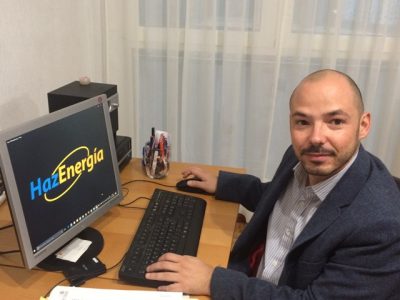
Pablo Corredoira Partner of Haz Energia, SL
Publicación anterior

Nace la Fundación Feníe Energía

Publicación siguiente

Hoy se celebra la subasta de renovables de hasta 3.000 MW

Relacionado Posts

infraestructuras energéticas
OPINION

Inteligencia artificial para energías renovables: clave para la transición o nuevo problema energético

25/11/2025
energía eólica marina
OPINION

Cómo la energía eólica del Mar del Norte carga los coches eléctricos en España

18/11/2025
autoconsumo
OPINION

Despliegue renovable en España: retos y oportunidades para 2030

05/11/2025
Publicación siguiente
hoy se celebra la subasta

Hoy se celebra la subasta de renovables de hasta 3.000 MW

Deja una respuesta Cancelar la respuesta

Tu dirección de correo electrónico no será publicada. Los campos obligatorios están marcados con *

hidrógeno verde

Arquitectura de celdas de flujo y stacks para la producción de hidrógeno verde a partir de N-derivados: Avances desde el proyecto NITRO-D-CELL

16/02/2026

Artículos Técnicos

Hidropaneles o cómo generar agua directamente de la atmósfera

Hidropaneles o cómo generar agua directamente de la atmósfera

13/04/2023
Las familias podrían reducir los gastos anuales mediante el uso combinado de bombas de calor y vehículos eléctricos.

Bombas de calor y vehículos eléctricos: el ahorro de 2.000 euros que podría aliviar a los hogares

04/06/2026
Joan Groizard inspeccionó en mayo la central ‘Soria II’ para conocer cómo las redes de calor renovables integran la biomasa en la industria soriana, reforzando la eficiencia y la sostenibilidad local.

El secretario de Estado de Energía visita y apoya las redes de calor renovables de Rebi en Soria

03/06/2026
El proyecto de la nueva planta de biomasa en Huelva dotará de energía limpia a Moeve.

Moeve y Magnon sustituirán el gas natural con una inversión millonaria de biomasa en Huelva

02/06/2026
La modernización de las energías renovables en Burgos recibe más de dos millones de euros de fondos europeos para sustituir aerogeneradores antiguos y actualizar una central hidroeléctrica.

Revolución verde en el medio rural: Burgos renueva sus parques de energía limpia con fondos europeos

01/06/2026
La alteración visual de los aerogeneradores mediante tonos negros, rojos y amarillos surge como una alternativa económica para mitigar los accidentes de los pájaros en los parques eólicos.

Pintar aerogeneradores con colores de advertencia reduce el riesgo para las aves

29/05/2026

ÚLTIMAS NOTICIAS

Las familias podrían reducir los gastos anuales mediante el uso combinado de bombas de calor y vehículos eléctricos.

Bombas de calor y vehículos eléctricos: el ahorro de 2.000 euros que podría aliviar a los hogares

04/06/2026
Joan Groizard inspeccionó en mayo la central ‘Soria II’ para conocer cómo las redes de calor renovables integran la biomasa en la industria soriana, reforzando la eficiencia y la sostenibilidad local.

El secretario de Estado de Energía visita y apoya las redes de calor renovables de Rebi en Soria

03/06/2026
El proyecto de la nueva planta de biomasa en Huelva dotará de energía limpia a Moeve.

Moeve y Magnon sustituirán el gas natural con una inversión millonaria de biomasa en Huelva

02/06/2026
La modernización de las energías renovables en Burgos recibe más de dos millones de euros de fondos europeos para sustituir aerogeneradores antiguos y actualizar una central hidroeléctrica.

Revolución verde en el medio rural: Burgos renueva sus parques de energía limpia con fondos europeos

01/06/2026
La alteración visual de los aerogeneradores mediante tonos negros, rojos y amarillos surge como una alternativa económica para mitigar los accidentes de los pájaros en los parques eólicos.

Pintar aerogeneradores con colores de advertencia reduce el riesgo para las aves

29/05/2026
SRAD red eléctrica

Red Eléctrica asigna 1.775 MW al servicio de respuesta activa de la demanda (SRAD) para el segundo semestre

29/05/2026
Energy News
Hidrógeno Verde Movilidad Eléctrica

Energy News Events, S.L.
CIF: B87179180
C/ Veleta, 13 - pta. 32
28023 Madrid
Tlf. 659 242 349

Todos los derechos reservados | © Energy News 2025

  • Aviso legal
  • Política de Cookies
  • Política de privacidad
  • Tarifas
Sin resultados
Ver todos los resultados
  • ACTUALIDAD
  • RENOVABLES
    • EÓLICA
    • BIOMASA
    • GEOTERMIA
    • BIOCOMBUSTIBLES
    • RECICLAJE
    • HIDROELÉCTRICA
    • ENERGÍAS MARINAS
    • ALMACENAMIENTO
  • SOLAR
    • FOTOVOLTAICA
    • SOLAR TERMICA
    • TERMOSOLAR
  • AUTOCONSUMO
  • INFORMES
  • AHORRO Y EFICIENCIA
  • HIDRÓGENO
  • CAMBIO CLIMÁTICO
    • MEDIO AMBIENTE
    • TRANSICIÓN ENERGÉTICA

Todos los derechos reservados | © Energy News 2025

¡Bienvenido de nuevo!

Iniciar sesión en la cuenta

¿Has olvidado la contraseña?

Recupera tu contraseña

Ingrese los detalles para restablecer la contraseña

Acceso

Agregar nueva lista de reproducción

Sin resultados
Ver todos los resultados
  • ACTUALIDAD
  • RENOVABLES
    • EÓLICA
    • BIOMASA
    • GEOTERMIA
    • BIOCOMBUSTIBLES
    • RECICLAJE
    • HIDROELÉCTRICA
    • ENERGÍAS MARINAS
    • ALMACENAMIENTO
  • SOLAR
    • FOTOVOLTAICA
    • SOLAR TERMICA
    • TERMOSOLAR
  • AUTOCONSUMO
  • INFORMES
  • AHORRO Y EFICIENCIA
  • HIDRÓGENO
  • CAMBIO CLIMÁTICO
    • MEDIO AMBIENTE
    • TRANSICIÓN ENERGÉTICA

Todos los derechos reservados | © Energy News 2025