

EnergyNews recently informed about the vast reduction in nuclear waste that could be achieved through a project utilizing molten salt for cooling. The project, still under financing and permits phase, could have a pilot plant in about 10 years. However, Iberdrola Ingenieria has launched a project to reduce nuclear waste, expected to be ready in 2015.
Iberdrola Ingeniería has started in Bulgaria the world»s most advanced project in the field of low and intermediate level radioactive waste management after being awarded, in consortium with the Belgian company Belgoprocess (80% and 20%, respectively), a 30 million euro contract.

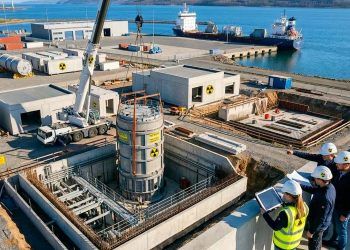
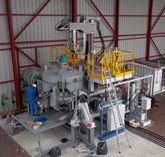
The initiative is co-financed through multilateral funds from European Bank for Reconstruction and Development (EBRD) and funds provided by the Bulgarian government. The project»s scope includes construction, at the Bulgarian Kozloduy nuclear power plant, of a radioactive waste treatment plant by applying plasma technology. This technique consists in reducing the volume of radioactive waste through the application of extreme temperatures up to 5,000 degrees Celsius. After application of such high temperatures, the result is a liquid residue that upon cooling vitrifies in one solid, with a volume up to 80 times lower than the original, which is subsequently placed in drums and cemented.
Kozloduy project opens a new door to the nuclear energy sector, in which Iberdrola Ingeniería y Construcción is a global benchmark by allowing a very significant reduction in low and intermediate level radioactive waste»s volume that is generated during operation of its plants.
Other projects
Iberdrola won the tender after competing with major international companies, and thus strengthens its position in the global nuclear business. Among their most prominent recent projects noteworthy are the power upgrade in Mexican nuclear power plant of Laguna Verde, completed in February this year, and as part of a consortium that also includes the Spanish company Elytt Energy and the Italian ASG Superconductors, the construction of torroidal chokes to be located inside the International Thermonuclear Experimental Reactor (ITER).
Low and intermediate level waste activity in Spain
Intermediate level radioactive waste are radionuclides released during the nuclear fission process, in small amounts well below those considered dangerous to the safety and protection of persons. Those considered as low activity level radioactive waste are generally the tools, clothes and other material used for the maintenance of nuclear power plants, research laboratories, hospitals, and some industries. Management of such waste is defined under the General Plan for Waste approved by Parliament and is conducted by the National Radioactive Waste Company (ENRESA)