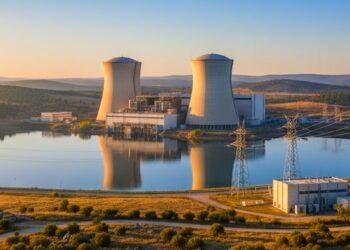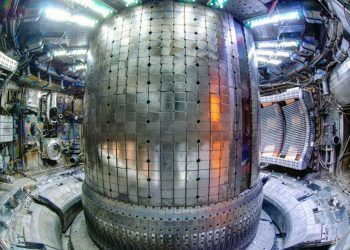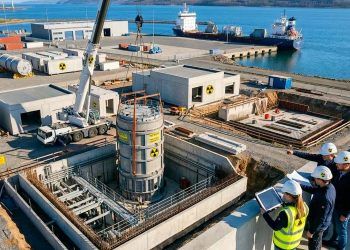


High costs of new tax on electricity production have become the primary cause of Nuclenor to advance the end of the plant’s activity.
From the Castile and Leon regional government a dialog is requested to the Ministry of Industry and Nuclenor to bring positions closer together in order to ensure the plant’s operations continuity.

This is a «Chronicle of a Death Foretold.» The Garoña (Burgos) nuclear power plant ceased activity at 23.00 pm yesterday, Sunday, when it was disconnected from the Spanish grid. Nuclenor (Endesa and Iberdrola), took this decision after the Senate approved on Thursday the Draft Law on Tax Measures for Energy Sustainability, forcing the plant to pay, as stated by the associated companies, » additional taxes worth 153 million euros in 2013. «
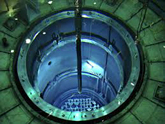
The process of reducing the reactor load started yesterday at 16:30 and at 23:00 pm, the reactor was decoupled from the grid, almost 42 years after it had been put in operation for the first time back in March 2, 1971. However, Nuclenor could restart, says a spokesman, «if the law on tax measures for utilities was not enacted or if once enacted, the conditions finally imposed substantially differed from those proposed in the initial draft law”.
The new tax requires Endesa and Iberdrola to pay 7% over the plant’s production value. But the main problem, which has led to rush in the reactor shutdown last Sunday night, is the new tax on the production of spent nuclear fuel. This tax would force the Burgos nuclear power plant to pay 153 million euros next year to take out of its reactor 400 spent nuclear fuel elements that it currently contains, at the rate of 2,190 euros per kilogram of radioactive uranium and plutonium.
The closure of the Garoña (Burgos) nuclear power plant before the end of the year would constitute an anticipation of its operating license finalisation set for 6 July 2013. The new taxation for electricity began to take hold in January this year, as admitted last week by the Popular Party in the Senate. Moreover, Spain relies on imports for meeting its energy needs and nuclear power accounted for 20 percent of domestic electricity demand in 2011.
As the news on the draft bill reached Iberdrola and Endesa, the plant owners, the decision was made by both companies on 5 September not to apply for the new
operating permit between July 2013 and July 2019. However, in October, Nuclenor had launched a press release in which it foreshadowed its commitment to the continuation of operations at Garoña, but keeping some doubt upon approval of the final text of the Bill that the Ministry of Industry had already presented. According to this statement, Nuclenor’s Board of Directors, though some of the unknowns and uncertainties that advised not to apply for authorization to operate were still subsisting on September 5, continued to support the continuity option maintaining the confidence that such unknowns and uncertainties would be dispelled within a reasonable period.
From the Castile and Leon regional government, a dialogue is demanded between the Ministry of Industry and Nuclenor to bring positions closer together with the aim of achieving continuity of Santa Maria de Garoña and its 600 direct jobs. Others see no alternative, because the target of the Government is to raise 2,560 million euros a year to begin to put an end to the drain of the tariff deficit, as admitted by the PP spokesman in the Senate, José Ignacio Palacios Zuasti, on Thursday last week. Moreover, the PSOE says that this new law and its taxes will ultimately end up being paid by the citizens, whose bill has risen by 70% since 2005.
The ecological vision
Ecologists in Action, the General Confederation of Labor and Greenpeace, the three organizations that called for the immediate closure, welcome the outage of the oldest nuclear power plant in Spain and called on the Government and the Minister of Industry to establish a closure schedule for the rest of the Spanish nuclear power plants (7 others).
Nuclenor, Castile and Leon regional government, UGT and USO among others, were seeking to extend the use of the plant. For Greenpeace, this would constitute recklessness and they already wondered why the plant was allowed to continue to operate today with very degraded safety systems and the serious problems of thermal pollution that was occurring on the river Ebro.